
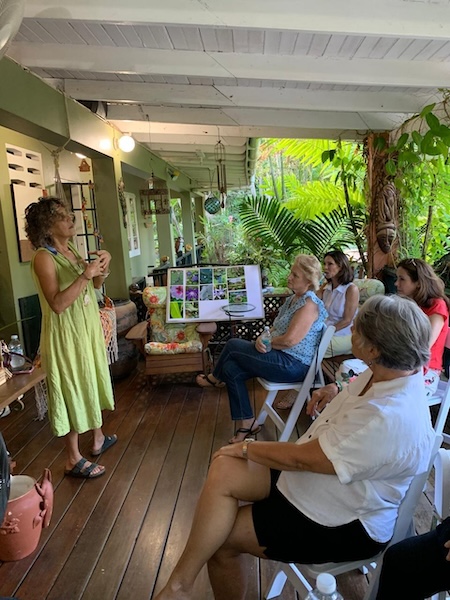
Meeting at the Simone de la Bastide's Garden - October 2026
Nestled, almost secretly, in the bosom of Haleland Park is a house that remembers. It remembers the measured rhythms of an agricultural enterprise, when nutmeg and grapefruit ruled this fertile land, and the house itself served as the secondary estate house for a plantation that stretched across the surrounding slopes of Perseverance. Today, that same house has been transformed into a private home of rare character, its history layered like the rings of the old trees that once dominated the landscape.
The story of this property is a story of reinvention; of a building and a landscape that have been reimagined without being erased. The original structure, built as the secondary estate house, was never intended to be grand in the manner of the great plantation houses. I imagine it was a working building, a place for the estate’s overseer or manager, a secondary seat of operations from which the nutmeg and grapefruit trade was conducted. Its proportions were practical, its materials local (evidenced by the large river rocks unearthed from major remedial work on the foundation), its location chosen for access to the fields rather than for picturesque views. Yet even then, it occupied a privileged position: close enough to the main estate to be useful, far enough to possess its own authority.
The nutmeg and grapefruit estate itself was part of a vanishing economy. Nutmeg, once among the most valuable spices in the world, had been cultivated across the Caribbean since the seventeenth century, and grapefruit, a more recent arrival (developed in Barbados in the 18th century, by accident) had become a staple of the region’s export agriculture by the nineteenth and early twentieth centuries. The estate would have been a place of seasonal rhythms: the harvesting of nutmeg fruits, the careful drying of mace and nutmeg during the months of May to August, the picking and packing of grapefruit for distant markets from October to January. The secondary estate house sat at the center of these rhythms, a modest but essential link in a network of production that connected this hillside to ports and markets across the Atlantic world.
When the estate economy faded as it did across much of the region, the house might easily have been abandoned or demolished, simply another casualty of agricultural decline. Instead, it passed into private hands and began a slow, deliberate transformation. The fields that once held nutmeg and grapefruit trees gave way to the well-to-do Haleland Park development.
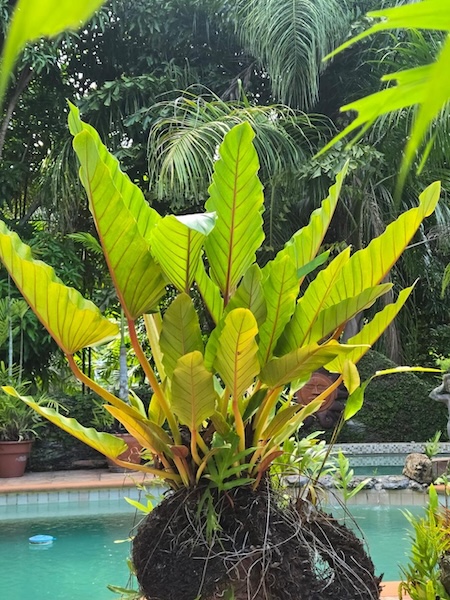
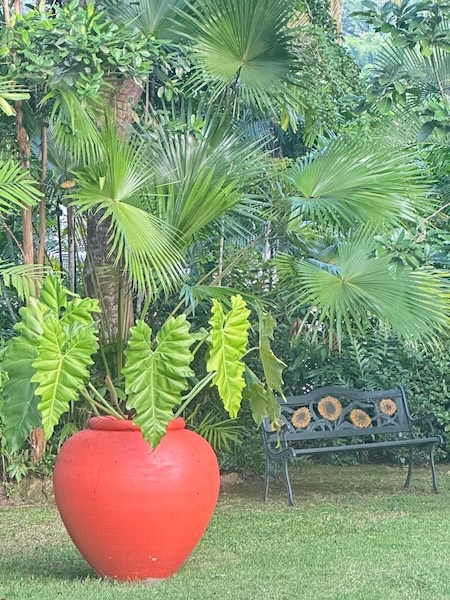
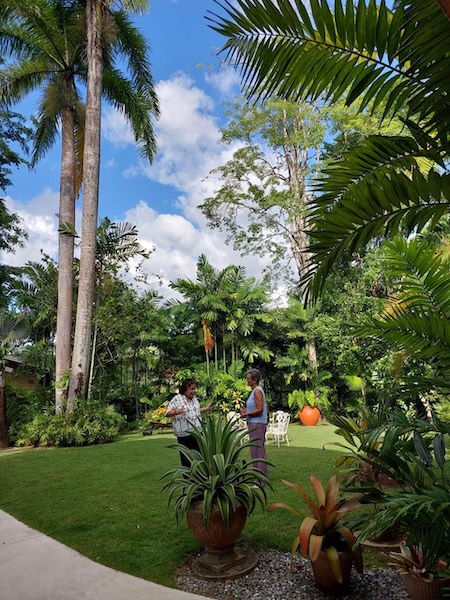
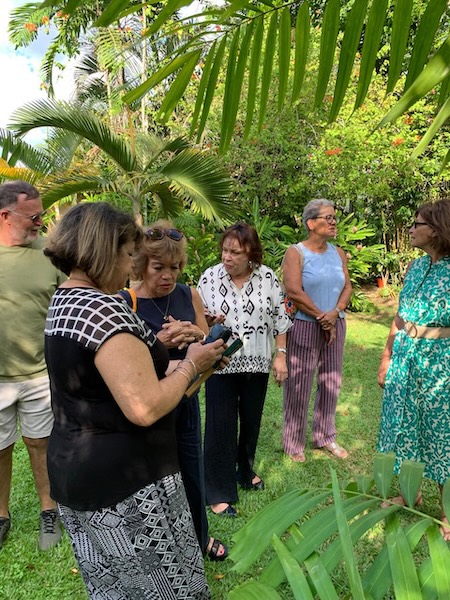
About two hundred palm trees now stand proudly in the grounds of this estate house, their fronds casting shifting patterns of light and shadow across expansive gardens. The palms are not agricultural; they are ornamental and architectural, a deliberate choice that signals the property’s new identity as a place of leisure and beauty rather than production.
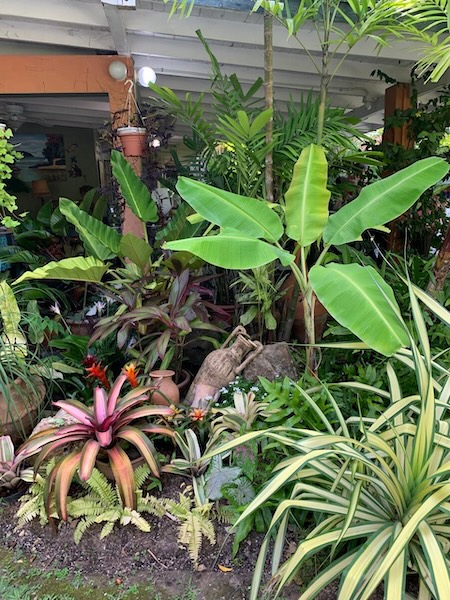
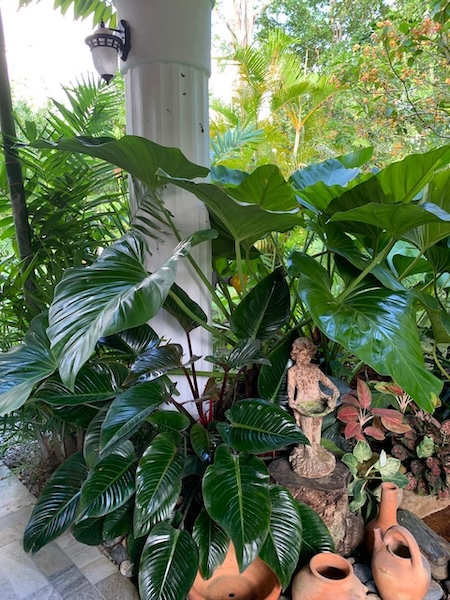
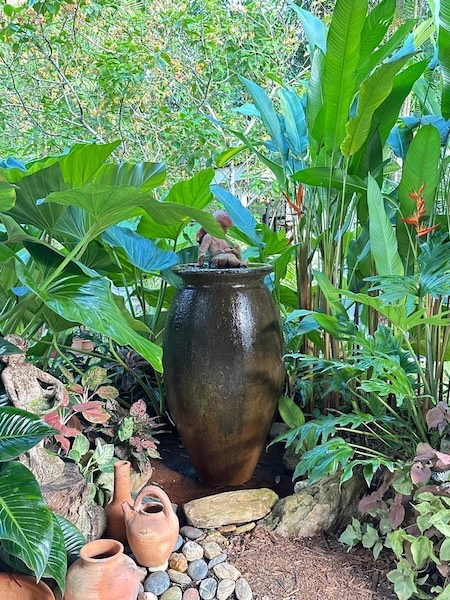
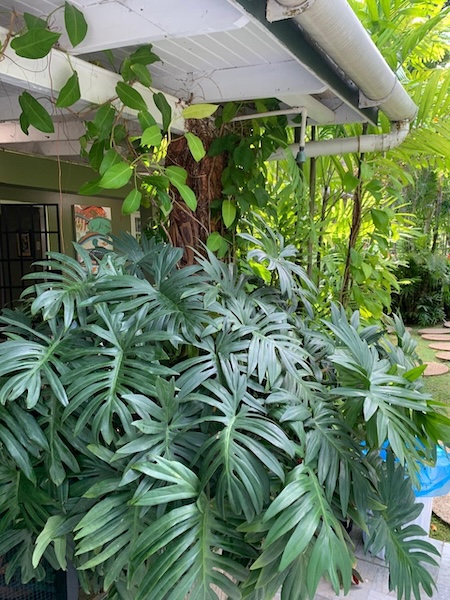
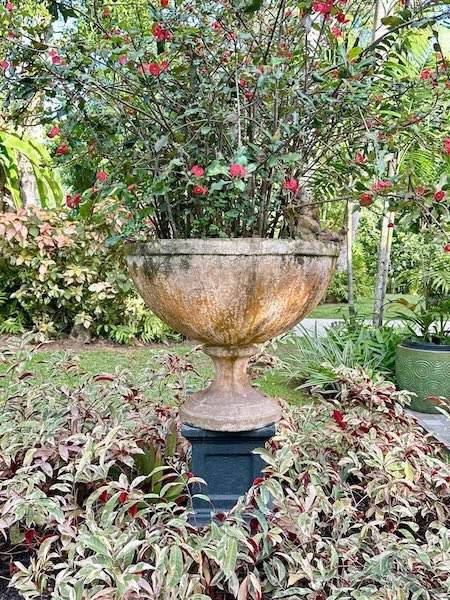
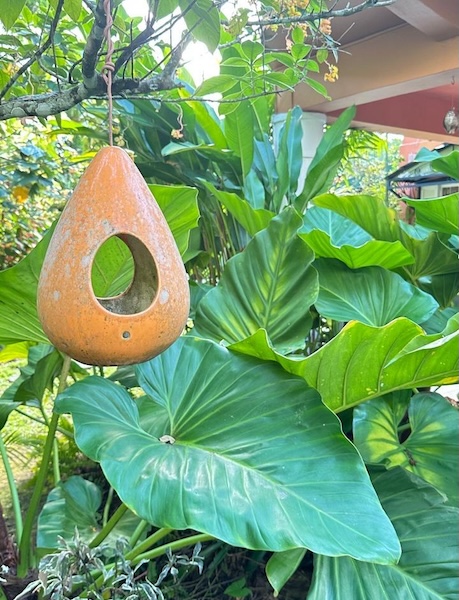
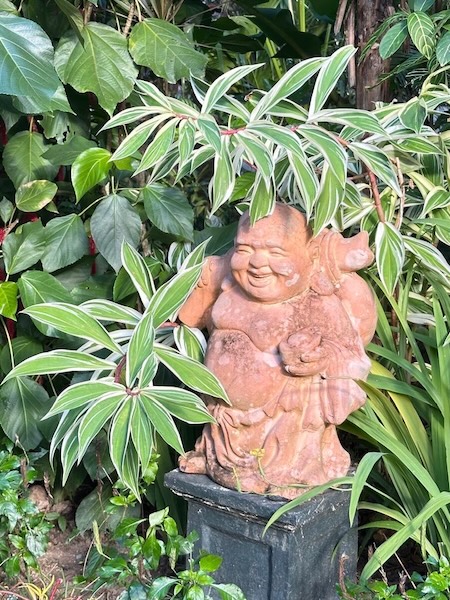
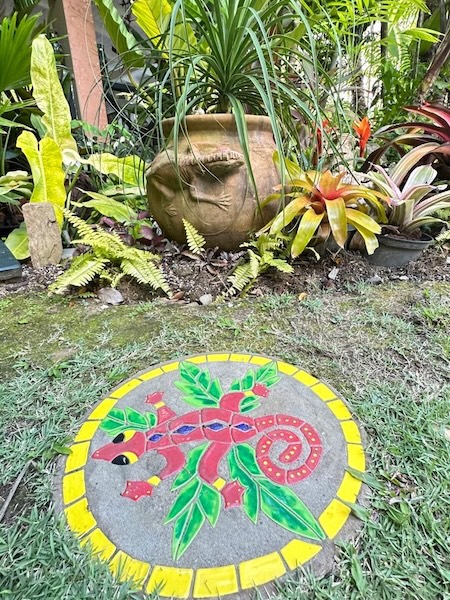
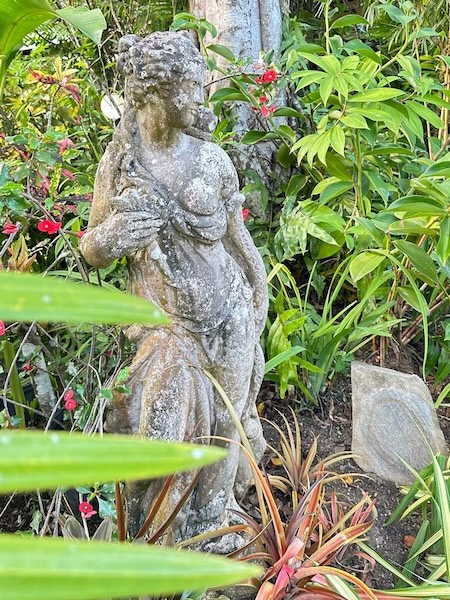
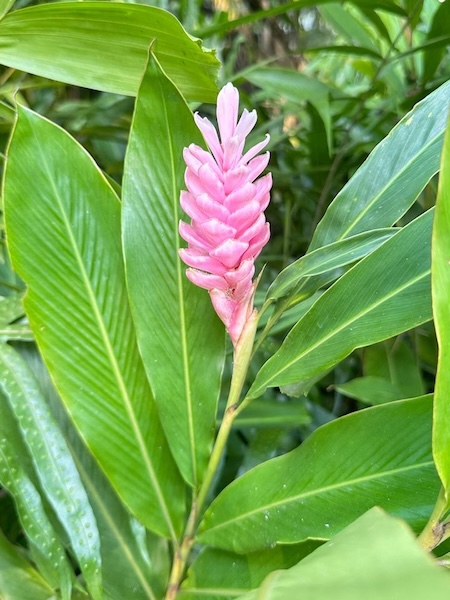
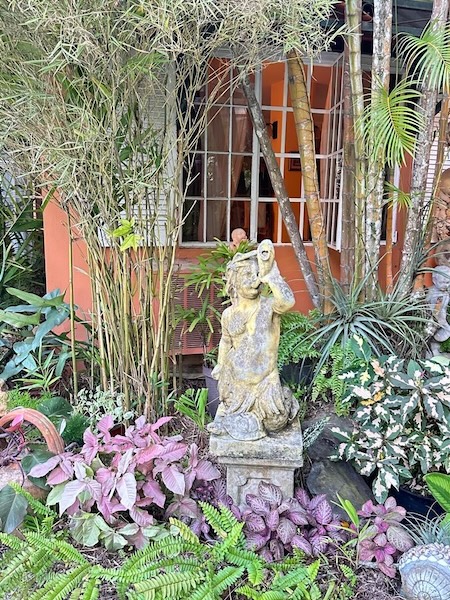
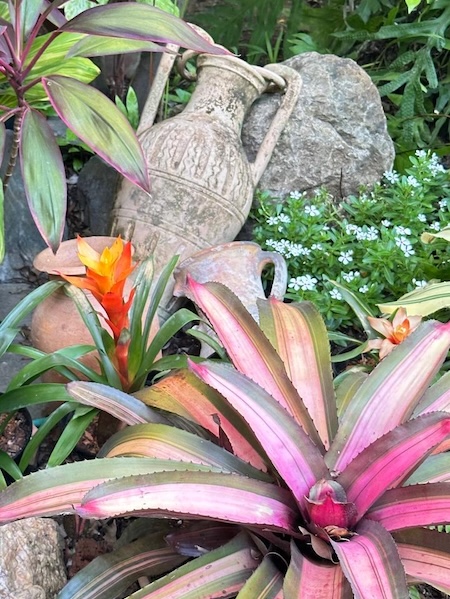
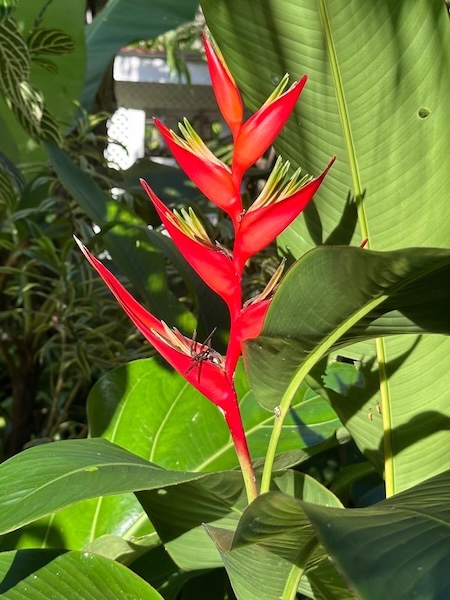
The gardens themselves were designed to be wandered rather than worked, with mature Royal Palms and a mammoth Bougainvillea, planted in what looks to be a foundation buttress of yesteryear. Large leaf Philodendrons and Bromeliads to take your breath away are positioned in just the right spots. Where nutmeg trees once demanded careful harvesting and grapefruit groves required systematic maintenance, there are now lawns and flower beds, pathways and seating areas, Romanesque statues and other architectural surprises, and hidden spaces for contemplation and conversation. The shift from productive to ornamental landscape is a familiar one in the history of Caribbean estates, but here it has been accomplished with unusual care. The new gardens do not pretend that the old ones never existed, but they do insist on the present.
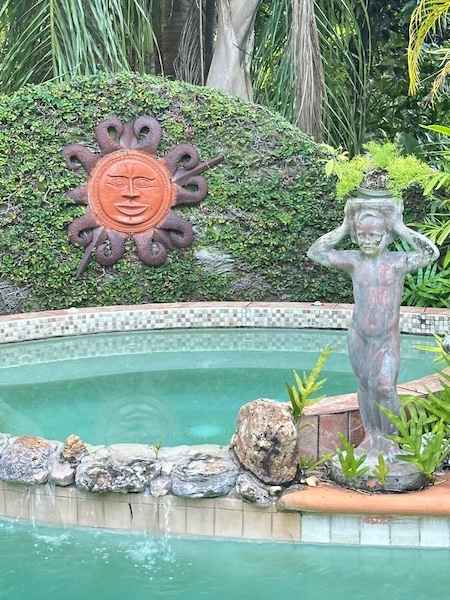
The most striking transformation, however, is the swimming pool. Once a water catchment area, it has been converted into a place of recreation. The catchment area’s function was essential to the estate’s survival. Without water, neither nutmeg nor grapefruit nor the people who tended them could flourish. Now that same water, held in the same excavated space, serves a different purpose: pleasure rather than necessity. The pool is adjacent to a bar area, where drinks, and conversations flow freely, sometimes freer than the pipe borne water supply. The old catchment’s walls, perhaps still underlie the new pool’s structure, a
hidden continuity beneath the surface of change.
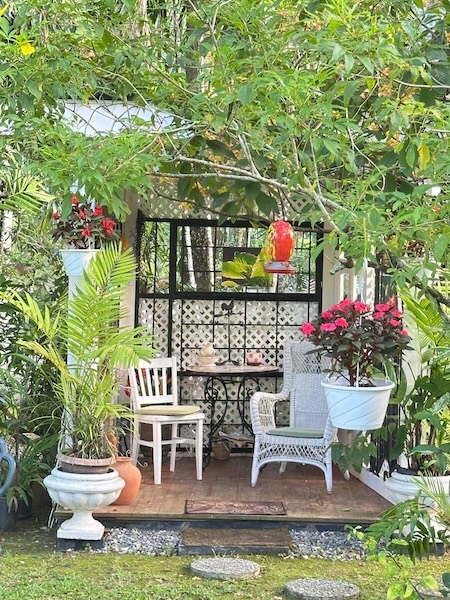
And then there is the gazebo. Designed by the current owner and built from old doors and windows, it is the property’s most personal and sentimental gesture, a structure that embodies the idea of reinvention in its very materials. The gazebo is a collage of architectural memory, a building made from the salvaged fragments of other buildings. It stands as a kind of manifesto: nothing is discarded, everything can be reused, and the past is not a burden but a resource.
Together, these elements constitute a new kind of estate, one organized around leisure and beauty, rather than production and profit. Yet the old estate is not entirely absent. It persists in the house’s proportions, in the siting of the pool, in the river stones of the foundation. The property is a surface on which successive generations have written and rewritten their purposes, without ever fully erasing what came before.
To walk through this property today is to move through layers of time and it is palpable. The palm trees rustle in the trade winds that once ripened nutmeg and grapefruit. The pool glints in the sun that once was an essential water catchment area. The gazebo, made of old doors and windows, stands as a personal monument and a monument to the idea that a building can be many things in its lifetime, that a secondary estate house can become a private home, that a catchment can become a pool, that an agricultural landscape can become a garden. The property does not mourn its past; it incorporates it and celebrates it. And in that incorporation, it offers a model of how to inhabit a place in history without being imprisoned by it, how to make something new without destroying what was there before. This property has kept faith with the place’s deepest truth: that land and buildings are never finished, only reborn.
VIEW SLIDESHOW BELOW
- "Gardening: the art of losing yourself while finding peace."